
Octo Duct
Duct detection and grading in pancreatic adenocarcinoma
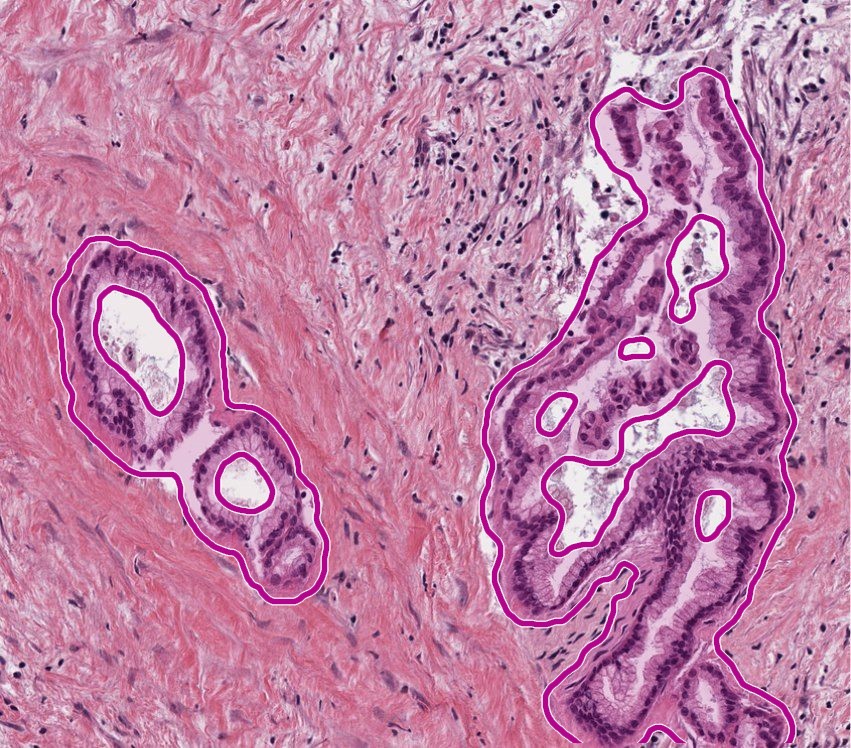
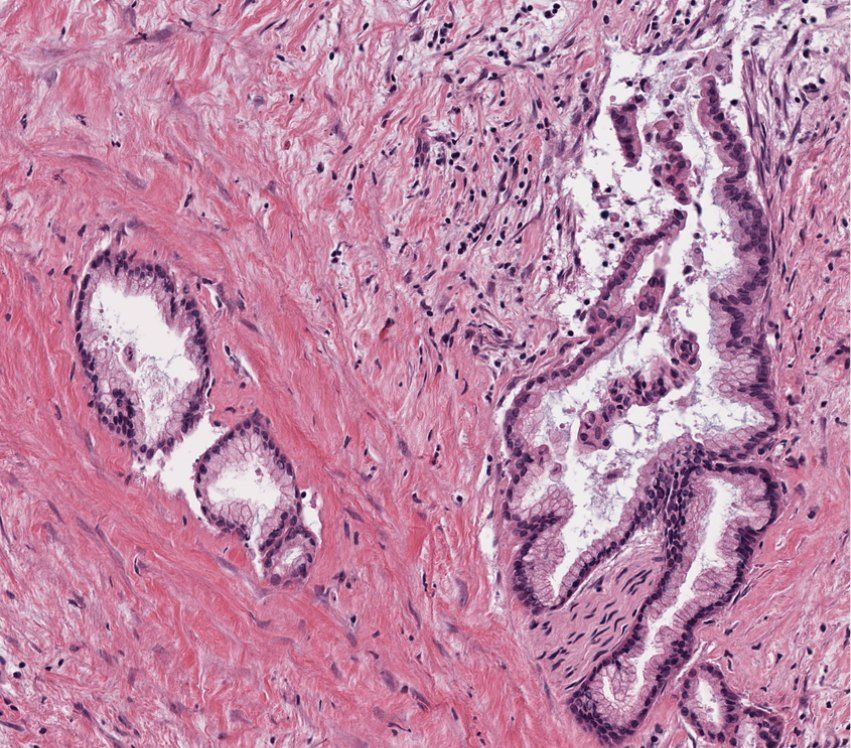
Every neoplastic duct in a pancreatic ductal adenocarcinoma outlined and classified by how well it is formed, so the WHO grade follows from the section rather than from an impression of it.
Grade is judged by eye
The WHO grade of pancreatic ductal adenocarcinoma rests on how much of the tumour forms glands. The pathologist estimates it across a heterogeneous tumour, and the call between moderately and poorly differentiated varies between readers.
Grade is a required item
Tumour grade is part of the WHO classification and the pancreas reporting standards, and it carries prognostic weight. A measured proportion of well-formed and poorly formed ducts makes it reproducible.
From duct shapes to WHO grade
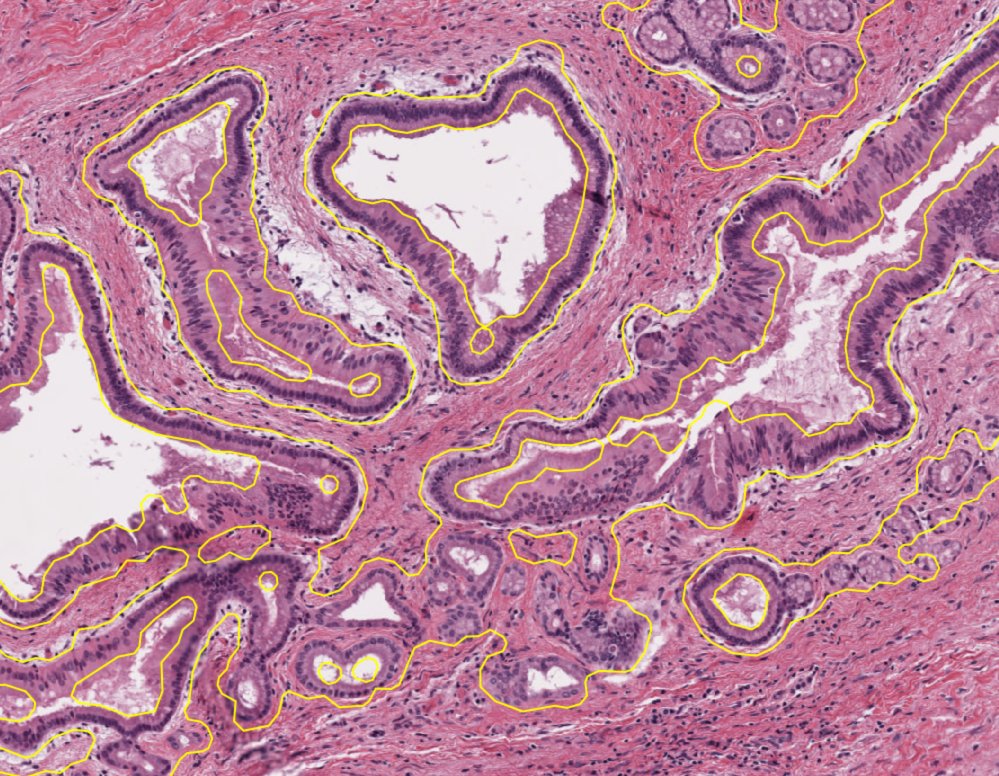
Octo Duct outlines every neoplastic duct in the pancreatic adenocarcinoma, from the epithelial cells Kraken finds. The same contours give the grade, and they carry prognostic information of their own.
- OSHR 0.56p = 0.006
- DSSHR 0.56p = 0.013
- PFSHR 0.57p = 0.005
- OSHR 1.85p = 0.003
- DSSHR 1.99p = 0.003
- PFSHR 1.72p = 0.006
172 patients (TCGA-PAAD), split at the median; Kaplan–Meier, log-rank test. OS overall, DSS disease-specific, PFS progression-free survival.
Three things you stop doing by hand
- 01Every duct outlined
Each neoplastic duct detected and its boundary drawn across the whole section.
- 02Classified the same way
Well formed or poorly formed, by the same criteria on every slide, for every reader.
- 03Across the whole section
The grade reflects the whole tumour, with the areas that drive it shown on the map.
What you get back
datadataoverlayGeoJSON / CSVTumour grade reported to the WHO Classification of Tumours (digestive system) and the ICCR pancreas reporting standard · Reference →
Evidence
Regulatory status: research use only.
Try Octo Duct
Run it on a slide in the platform, or ask for the product sheet with the full output specification.